
《How to Stay Smart in a Smart World 在智慧世界中保持睿智》
【活動資訊】
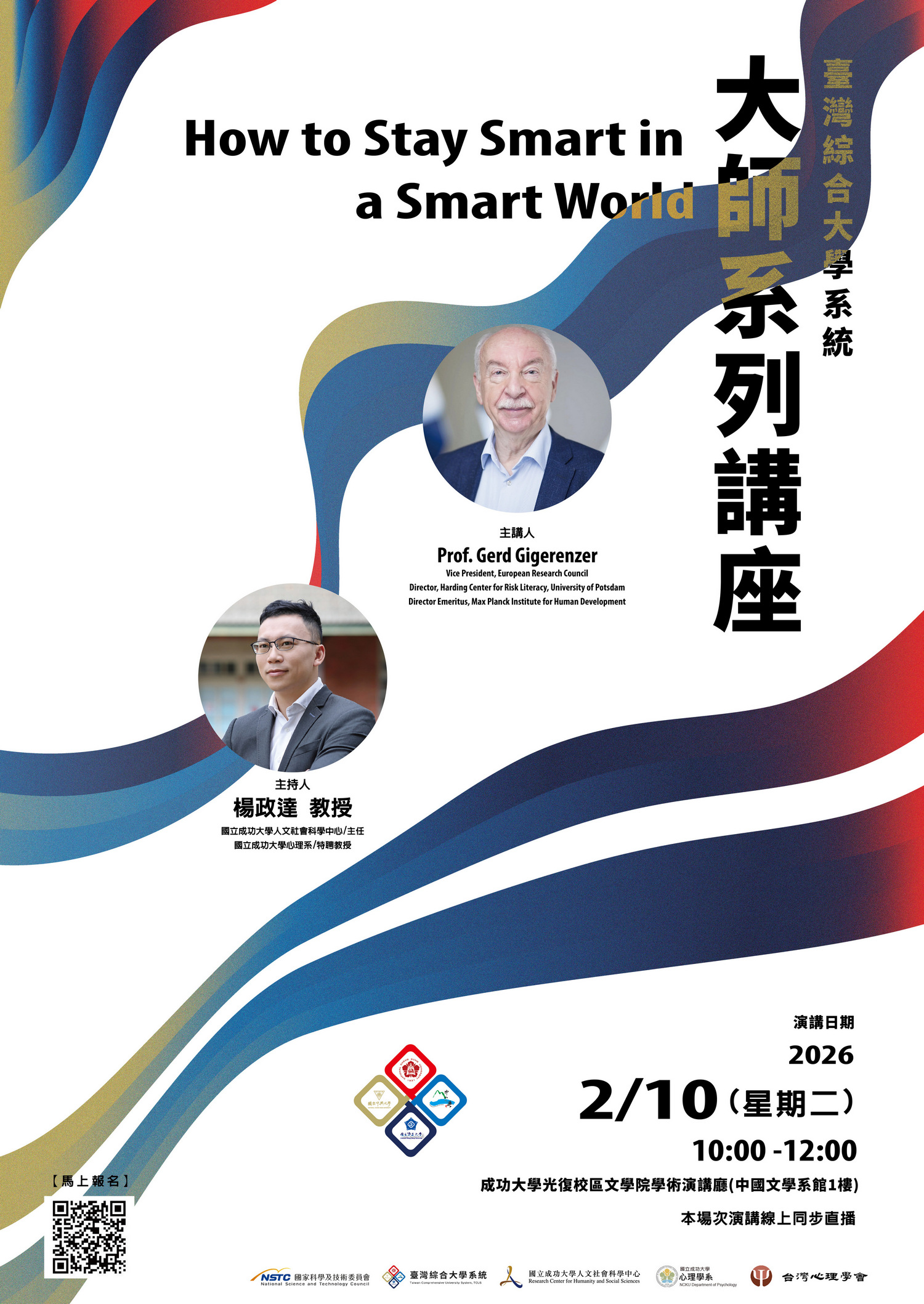
☉ 主題:《How to Stay Smart in a Smart World 在智慧世界中保持睿智》
☉ 時間:115年2月10日(二)10:00~12:00
☉ 地點:國立成功大學光復校區 文學院學術演講廳 (中文系館1F)
☉ 演出團體:各大學崑曲社團師生與畢業校友
☉ 主辦單位:國立成功大學藝術中心、國立成功大學人文社會科學中心
☉ 協辦單位:國立成功大學心理系VCMLab、拾翠坊崑劇團、東寧雅集、國立臺灣戲曲學院、國立成功大學文學院跨領域戲劇學分學程、國立成功大學藝術研究所暨戲劇碩士學位學程、國科會臺灣運動文化研究專案計畫
☉ 入場方式:自由入座,一人一票,憑票入場
☉ 活動詳情:連結
【索票資訊】
☉ 索票時間:3月2日(一)起09:00-17:00開放至成大藝術中心(光復校區學生活動中心一樓)現場索票,索完為止(平日12:00–13:00 及例假日不開放索票)
【簡介】
一段被禮教克制,卻深情不減的愛情故事。 崑曲經典《玉簪記》,以溫柔婉轉的唱腔與細膩身段,描寫潘必正與陳妙常,在相知、相惜與克制之間,一步步走向真心相守的動人歷程。
本演出由國立成功大學人文社會科學中心與藝術中心聯合主辦,成大人社中心楊政達主任特邀國內傑出崑曲曲友參與演出。演出以崑劇《玉簪記》小全本為核心,並於正式演出前安排宋江陣傳統武陣作為開場秀。透過崑曲婉約的唱念身段與民間武藝剛健的展現,呈現傳統文化多元而豐富的藝術樣貌,展現教學、研究與展演的交融,深化觀眾對崑曲典雅美學與經典藝術的理解與欣賞。
【節目介紹】
明代劇作家高濂傳奇《玉簪記》,以落第書生潘必正與寄居道庵的落難千金陳妙常之愛情為主線,描繪二人從相惜到相知、相戀,最終互信相守的動人歷程。《玉簪記》挑戰了世俗禮教,詞真情婉,以崑曲演來尤其動人。自1985年上海崑劇團岳美緹、華文漪主演後,《玉簪記》小全本成為廣受喜愛的經典。本次演出結合成功大學藝術研究所暨戲劇碩士學位學程馬薇茜副教授的表演藝術與戲曲課程,規劃微型開場秀,並融入宋江陣傳統武陣元素,透過戲曲唱念身段與武陣的交錯呈現,實踐教學、研究與展演的交融,帶領觀眾從多元視角理解崑曲的人文與藝術精神,深化經典文化於當代的理解與傳承。
